FineVT Expands UAV and Counter-UAS Cooperation with the U.S. 2nd Infantry Division / ROK–U.S. Combined Division
Advancing ROK–U.S. Collaboration in MUM-T, Electronic Warfare, Counter-UAS Training, and Defense Sustainment
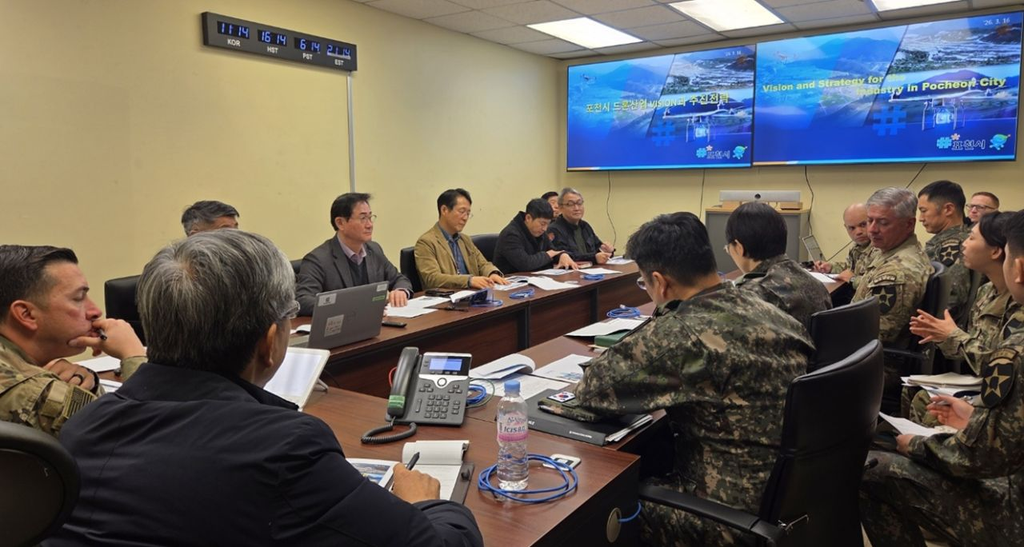
The 2nd Infantry Division / Republic of Korea–U.S. Combined Division (2ID/RUCD) has initiated discussions on defense-industrial cooperation with the Republic of Korea in the Unmanned Aerial System (UAS) and Counter-Unmanned Aircraft System (Counter-UAS) domains.
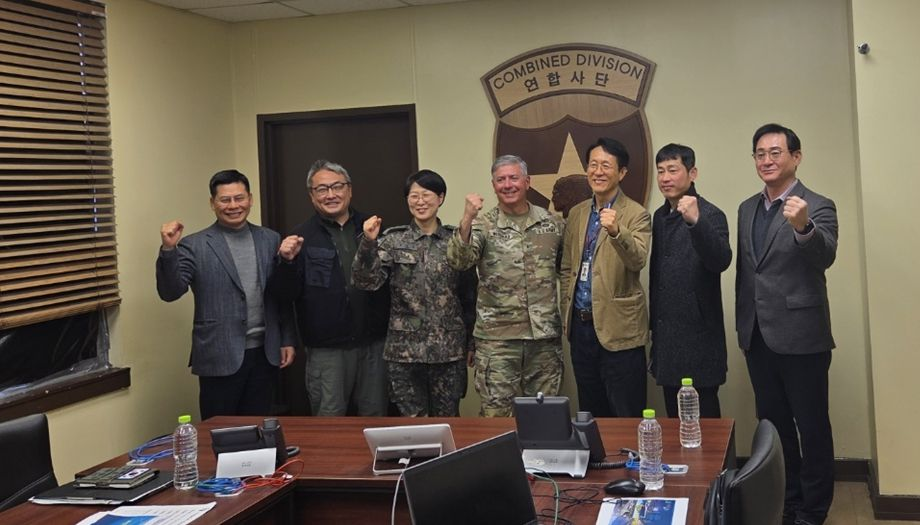
On 16 March 2026, representatives from the U.S. 2nd Infantry Division, the ROK–U.S. Combined Division, FineVT Robotics LAB, FineVT E/W & Security LAB, and Pocheon City’s drone program convened at Camp Casey in Dongducheon, Republic of Korea, for a Counter-UAS coordination meeting.
The meeting represented an important step toward strengthening operational and technological cooperation between United States Forces Korea and the Republic of Korea in response to the rapidly evolving threats posed by unmanned aircraft, electronic warfare, GNSS disruption, and multi-domain operations.

Key Areas Discussed
Participants discussed opportunities to establish a practical cooperation framework covering technology development, operational experimentation, training, system integration, and defense sustainment.
Key areas included:
- Technical cooperation in UAV and Counter-UAS systems
- Manned–Unmanned Teaming technology and operational concepts
- Electronic warfare and electromagnetic-spectrum operations
- Counter-UAS detection, identification, tracking, and response
- Joint defense exhibitions and technology demonstrations
- Bilateral seminars and technical workshops
- Reciprocal education and training programs
- Joint utilization of Korean and U.S. training facilities
- Drone manufacturing, maintenance, repair, and overhaul
- Interoperability with allied command-and-control environments
- Evaluation of trusted and secure UAS technologies
- Development of long-term ROK–U.S. industrial partnerships
The participants agreed on the importance of combining the operational experience of 2ID/RUCD with the research, engineering, and system-integration capabilities of the Korean defense industry.
FineVT Robotics LAB’s Role in MUM-T and Unmanned Systems
FineVT Robotics LAB agreed to explore cooperation in Manned–Unmanned Teaming (MUM-T) and integrated unmanned-system technologies.
FineVT Robotics LAB develops and integrates unmanned platforms and mission systems across the air, ground, and maritime domains. Its core areas of business and research include:
- Fixed-wing and VTOL UAV platforms
- Medium-Altitude Long-Endurance ISR UAV systems
- Tactical reconnaissance and surveillance UAVs
- Unmanned Ground Vehicles
- AI-based autonomous flight and mission management
- Multi-UAV collaborative operations
- MUM-T and multi-domain robotic integration
- UAV Traffic Management and mission-control technologies
- Secure command-and-control data links
- Anti-jamming and GNSS spoofing-countermeasure systems
- ROS 2 and DDS-based interoperability
- C4ISR and tactical-network integration
- AI-based digital twins and LVC training simulation
- Quantum-secure communications incorporating PQC, QRNG, and QKD
Rather than focusing exclusively on individual unmanned platforms, FineVT is developing an integrated operational architecture connecting aircraft, sensors, communications, AI, mission payloads, command and control, cybersecurity, and operational-support systems.
Within the proposed cooperation framework, FineVT Robotics LAB will examine how its technologies can support reconnaissance, surveillance, force protection, logistics, communications relay, and MUM-T missions in combined operational environments.
FineVT E/W & Security LAB’s Role
FineVT E/W & Security LAB committed to expanding cooperation in electronic warfare, cybersecurity, and Counter-UAS capabilities.
Its proposed areas of collaboration include:
- Radio-frequency detection and spectrum monitoring
- Drone-signal analysis and classification
- Radar, RF, EO/IR, and acoustic sensor fusion
- AI-based drone detection and identification
- Electronic-support and electronic-protection technologies
- Counter-UAS command-and-control systems
- Jamming and spoofing-countermeasure technologies
- GNSS-denied navigation and resilient positioning
- Secure tactical communications
- Cybersecurity assessment for unmanned platforms
- Soft-kill and hard-kill system integration
- Electronic warfare simulation and training
The objective is to develop a layered Counter-UAS concept that integrates early warning, detection, tracking, identification, command and control, electronic response, and operational assessment.
All future activities involving electronic warfare and Counter-UAS technologies will be conducted in accordance with applicable Korean and U.S. laws, military regulations, security requirements, spectrum-management rules, and export-control procedures.
Leadership of Research Director Sejin Oh
The FineVT cooperation initiative is being advanced under the leadership of Sejin Oh, Research Director of FineVT Robotics LAB.
Research Director Oh oversees FineVT’s research strategy and international cooperation in UAV, UAM, MUM-T, Counter-UAS, electronic warfare, secure communications, AI simulation, and quantum-security technologies.
He also serves as:
- Cyber Director of the Korea Defense & Security Forum
- Deputy Director of the Drone-vs-Drone Center at the Ground Forces Research Institute of the Korea Army Association
Based on his experience in defense research, combat experimentation, international technology cooperation, and overseas market-entry strategy, Research Director Oh is promoting a cooperation model that connects military operational requirements with industrial R&D and field validation.
“The rapidly evolving UAV threat environment requires close cooperation among military operators, research organizations, defense companies, and local governments. FineVT intends to contribute its MUM-T, Counter-UAS, electronic warfare, secure communications, and simulation capabilities to the development of practical and interoperable solutions for the ROK–U.S. alliance,” said Sejin Oh, Research Director of FineVT Robotics LAB.
Proposed Cooperation Programs with 2ID/RUCD
Building on the initial coordination meeting, FineVT intends to explore several phased cooperation programs with 2ID/RUCD and relevant Korean stakeholders.
1. Joint Operational Requirements Analysis
FineVT proposes establishing a working-level process to analyze operational requirements based on realistic mission scenarios.
Potential scenarios may include:
- Protection of military bases and critical facilities
- Detection of low-altitude and small-drone threats
- Counter-UAS operations in urban and mountainous terrain
- Reconnaissance in GNSS-denied environments
- Defense against coordinated multi-drone threats
- MUM-T operations involving aerial and ground systems
- Tactical communications relay
- Logistics support and casualty evacuation
- Electronic warfare in congested spectrum environments
Operational feedback from military personnel would help FineVT refine system design, user interfaces, communications architecture, mobility, maintainability, and training requirements.
2. MUM-T Demonstration and Interoperability Testing
FineVT Robotics LAB proposes phased demonstrations of MUM-T technologies connecting manned operators, UAVs, UGVs, sensors, and command-and-control systems.
Testing may cover:
- Real-time video and sensor-data sharing
- Common operational-picture integration
- Autonomous route and mission planning
- Multi-platform task allocation
- Human-in-the-loop mission control
- Ground-air collaborative reconnaissance
- AI-supported threat detection
- Communications resilience
- Tactical-network interoperability
- Mission-data recording and after-action review
The purpose of these demonstrations would be to verify technical compatibility and operational usefulness before any consideration of broader field application.
3. Joint Counter-UAS Training and Combat Experimentation
FineVT E/W & Security LAB proposes cooperation in Counter-UAS training and combat experimentation using approved Korean and U.S. training facilities.
A potential program could include:
- Classroom education on current UAV threats
- Sensor and electronic-warfare equipment training
- Virtual and simulation-based mission rehearsal
- Field detection and tracking exercises
- Electronic-protection and response drills
- Integrated Counter-UAS mission execution
- AI-assisted performance assessment
- Joint after-action review and improvement
FineVT’s AI-based VR/MR Counter-UAS training technology could also be connected to future Live, Virtual, and Constructive environments, enabling repeatable training without relying exclusively on live aircraft and electronic-warfare equipment.
4. Joint Exhibitions, Seminars, and Technology Exchanges
The participants discussed joint exhibitions and seminars as a means of improving mutual understanding and identifying technologies relevant to combined operations.
Potential activities include:
- ROK–U.S. Counter-UAS technology seminars
- MUM-T operational-concept workshops
- UAV and electronic-warfare exhibitions
- Military–industry technical exchanges
- Cybersecurity and trusted-UAS forums
- Demonstrations at Korean training and test facilities
- Participation in U.S. and Korean defense exhibitions
- Exchange programs involving military operators and engineers
These activities would enable operators, researchers, and manufacturers to share lessons learned and accelerate the transition from technical concepts to field-relevant solutions.
5. Drone Manufacturing and MRO Cooperation
Pocheon City and relevant Korean defense authorities are expected to support discussions concerning the use of appropriate training grounds and the development of bilateral industrial cooperation.
A proposed UAV manufacturing and MRO framework may include:
- Airframe and component manufacturing
- Local assembly and system integration
- Mission-payload installation
- Software and firmware management
- Preventive and corrective maintenance
- Spare-parts management
- Operator and maintenance training
- Technical documentation
- Configuration and lifecycle management
- Performance upgrades
- Field-support services
- Supply-chain traceability
This framework could contribute to improved operational availability, reduced maintenance time, and the development of a sustainable Korea–U.S. unmanned-systems supply chain.
6. Blue UAS-Aligned Technology Cooperation
FineVT also intends to examine a future cooperation pathway aligned with the security, performance, supply-chain, and interoperability expectations associated with trusted U.S. government UAS programs, including Blue UAS-related requirements.
Potential areas of preparation include:
- Cybersecurity architecture assessment
- Supply-chain and component traceability
- Software and firmware vulnerability analysis
- Secure boot and trusted-update mechanisms
- Encryption of command, control, and mission data
- Protection of stored operational data
- Secure ground-control systems
- Modular open-systems integration
- U.S.-origin component and payload integration
- Operational testing and technical documentation
- Cooperation with qualified U.S. industrial partners
This initiative represents a future compliance and cooperation pathway. It should not be interpreted as a statement that FineVT products have already received Blue UAS approval or certification.
Cooperation with Pocheon City
Pocheon City’s participation provides an opportunity to connect military cooperation with regional drone-industry development.
Potential areas of support include:
- Identification of suitable drone training and test locations
- Cooperation with regional manufacturing companies
- Development of UAV maintenance and sustainment capabilities
- Support for defense-industry demonstrations
- Operation of industry–military seminars
- Workforce training and employment creation
- Development of a specialized UAV and Counter-UAS cluster
- Cooperation with Korean government agencies and research institutions
Through this model, Pocheon City could serve as an important regional base for testing, training, manufacturing, maintenance, and industrial cooperation in the UAV and Counter-UAS sectors.
A Long-Term Vision for ROK–U.S. Defense Cooperation
FineVT views the Camp Casey coordination meeting as the beginning of a long-term dialogue rather than a single event.
Future cooperation will be developed gradually through working-level consultations, technical reviews, demonstrations, training, operational experimentation, and joint evaluations. Individual activities will remain subject to the approval of the relevant Korean and U.S. authorities and compliance with applicable security, safety, spectrum, procurement, and export-control requirements.
FineVT Robotics LAB and FineVT E/W & Security LAB remain committed to contributing advanced Korean unmanned-system technologies to the ROK–U.S. alliance.
Through cooperation with 2ID/RUCD, USFK, Korean defense authorities, Pocheon City, universities, and industrial partners, FineVT aims to establish a sustainable framework for:
- Combined operational readiness
- Trusted and interoperable unmanned systems
- Advanced Counter-UAS capabilities
- MUM-T development
- Electronic-warfare preparedness
- Joint education and training
- Defense manufacturing and sustainment
- Bilateral research and industrial growth
FineVT will continue working to transform operational requirements into practical technologies and to strengthen the technological foundation of the ROK–U.S. alliance.
#FineVT #FineVTRoboticsLAB #FineVTEWSecurityLAB #SejinOh #USFK #2ID #RUCD #ROKUSAlliance #ROK #MND #DoD #UAV #UGV #MUMT #CounterUAS #ElectronicWarfare #C4ISR #MRO #BlueUAS #DefenseInnovation #Pocheon #CampCasey