FineVT Robotics LAB Hydrogen Fuel Cell-Powered eVTOL

1. FFW-015HFC Hydrogen Fuel Cell-Powered eVTOL
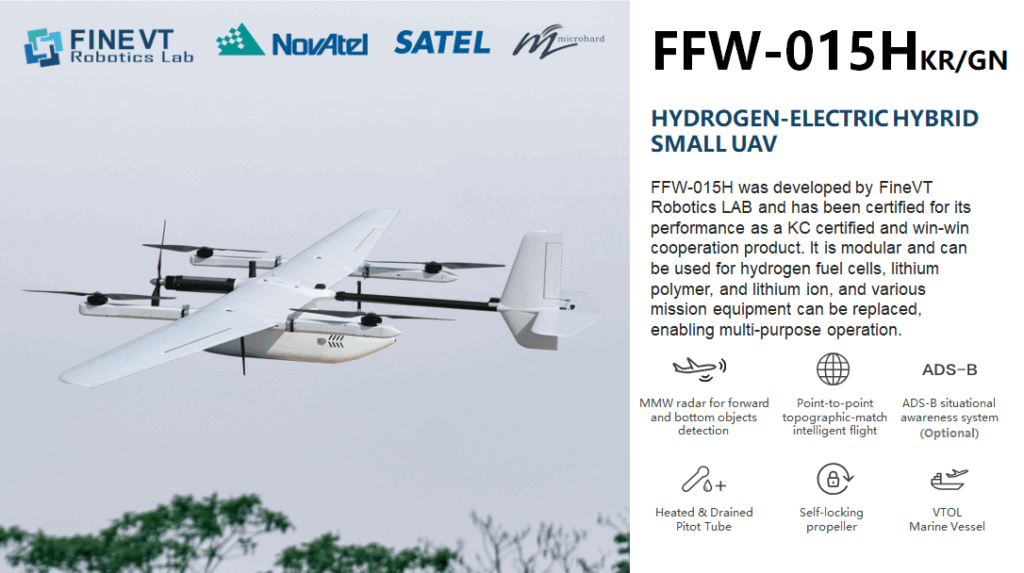
2. FFW-025HFC Hydrogen Fuel Cell-Powered eVTOL


🚀 Overview
Hydrogen-powered eVTOL (Vertical Take-Off and Landing) aircraft represent a breakthrough in clean, efficient, and sustainable aviation. By utilizing hydrogen fuel cells instead of traditional fossil fuels or batteries alone, these aircraft offer zero-emission flight, extended range, and low noise—making them ideal for the next generation of Urban Air Mobility (UAM) and advanced air transport.
⚙️ Key Components
| Component | Description |
|---|---|
| Hydrogen Tank | Stores compressed or liquid hydrogen fuel. |
| Fuel Cell Stack | Converts hydrogen and oxygen into electricity through an electrochemical reaction. |
| Electric Motors | Powered by the fuel cell to drive rotors for lift and propulsion. |
| Battery (Auxiliary) | Supports peak power demands and provides backup energy. |
| Propellers/Rotors | Enable vertical take-off/landing and horizontal flight. |

✅ Advantages
- Longer Range: Higher energy density than lithium-ion batteries, allowing extended flight durations.
- Fast Refueling: Hydrogen tanks can be refueled in minutes, unlike batteries that require longer charging times.
- Zero Emissions: Produces only water vapor—no carbon emissions.
- Low Noise: Quiet operation compared to combustion engines.



⚠️ Challenges
| Challenge | Description |
|---|---|
| Hydrogen Storage | Requires high-pressure or cryogenic systems. |
| Infrastructure Limitations | Hydrogen refueling stations are not yet widely available. |
| Cost of Fuel Cells | Technology is still relatively expensive. |
| Safety Considerations | Hydrogen is highly flammable and demands robust safety systems. |




🔍 Applications
- Urban Air Mobility (UAM)
- Emergency Medical and Cargo Delivery
- Military Reconnaissance and Surveillance
- Remote Area Transport