AIRPORT SECURITY REPORT
Subject: Operational Improvement and Neutralization Strategies for C-UAS / AAM / UAM at Major Airports
Focus System: FineVT Robotics LAB Anti-Drone System, Incheon International Airport
Date: 2023.10.08
Prepared for: Sejin Oh, FineVT Robotics LAB
1. EXECUTIVE SUMMARY
With the rapid proliferation of unmanned aircraft systems (UAS), advanced air mobility (AAM), and urban air mobility (UAM), airports face growing challenges in maintaining secure and efficient operations. The unauthorized presence of drones near critical aviation infrastructure poses risks to passenger safety, flight operations, and national security.
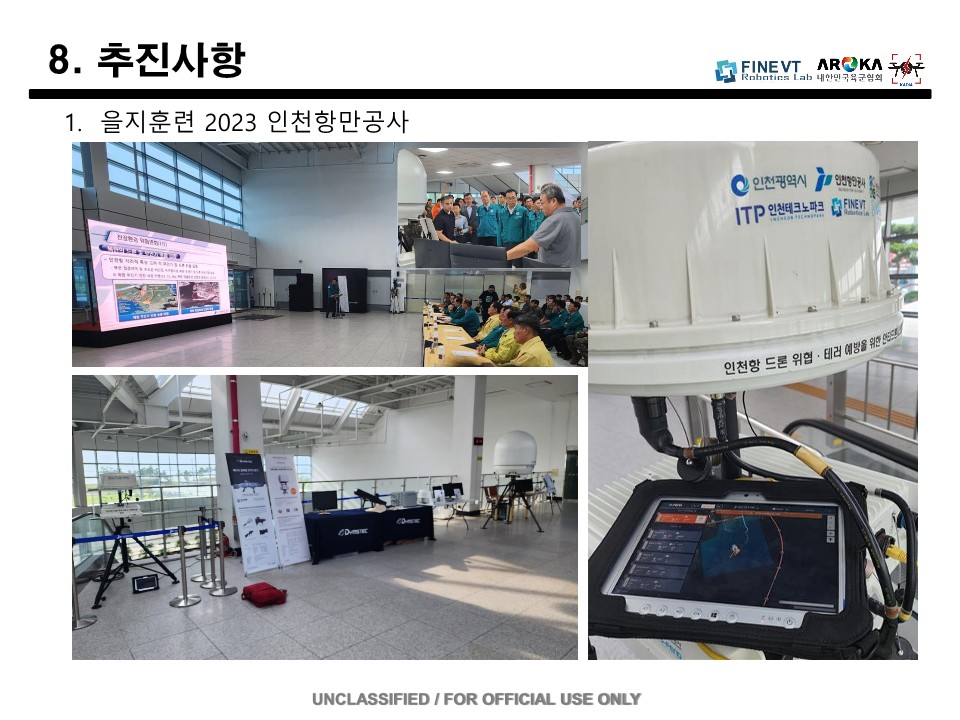
To address these threats, FineVT Robotics LAB has deployed an advanced Counter-UAS (C-UAS) system at Incheon International Airport. This report outlines operational improvement directions and effective neutralization strategies based on the deployment and performance of this system.
2. OPERATIONAL CHALLENGES
- Increased Drone Incursions: Rise in unauthorized drone activity near restricted airspace.
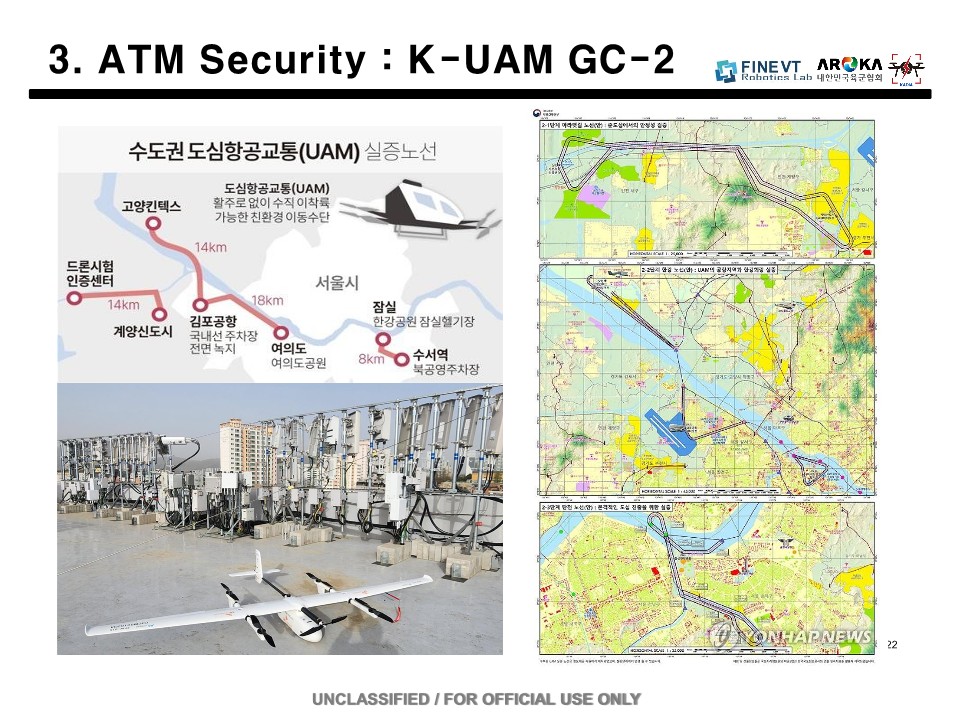
- Complex Air Traffic Environment: Integration of AAM/UAM vehicles with traditional air traffic control (ATC) systems.
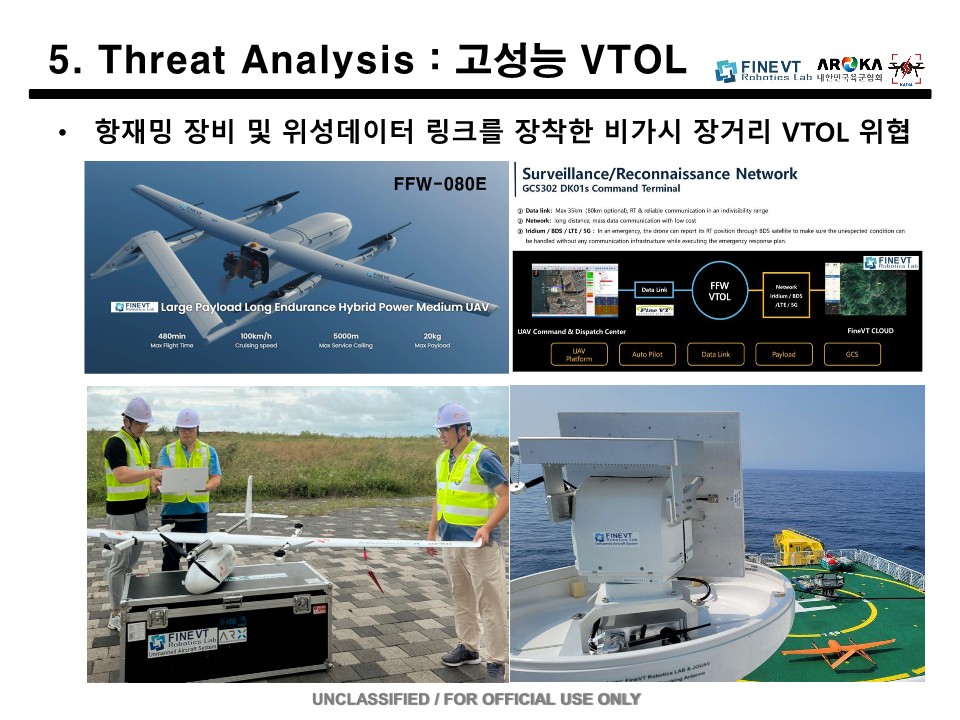
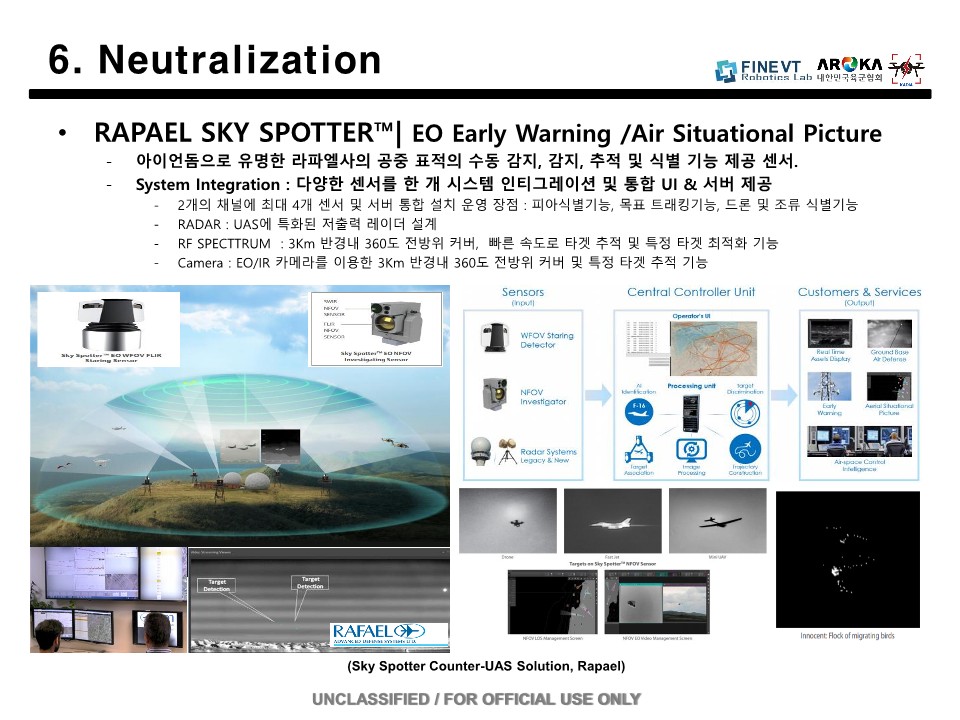
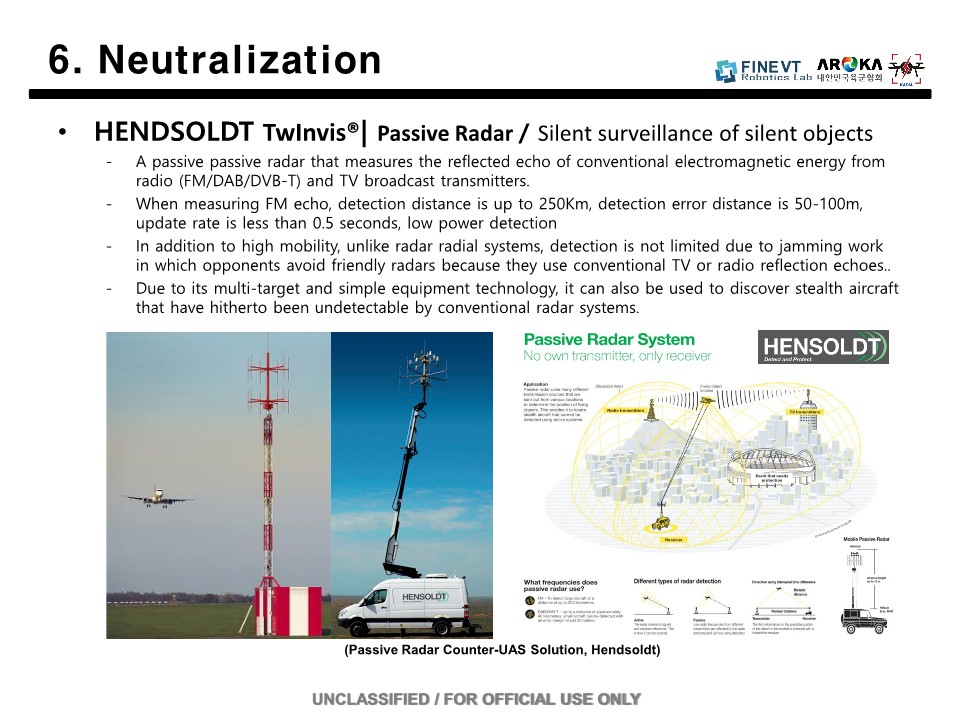
- Detection and Identification Difficulties: Small, low-RCS (Radar Cross Section) drones evade conventional radar.
- Neutralization Limitations: Balancing security with public safety and legal restrictions in urban environments.

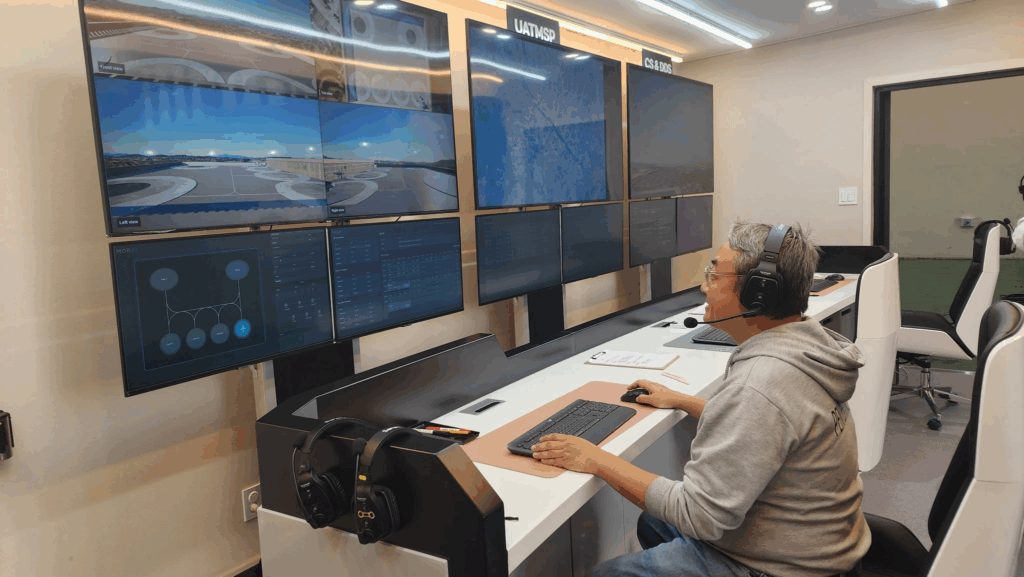
3. FINEVT ROBOTICS LAB ANTI-DRONE SYSTEM (INCHEON INTERNATIONAL AIRPORT)
Deployment Highlights:
- Location: Incheon International Airport, Republic of Korea.
- System Capabilities:
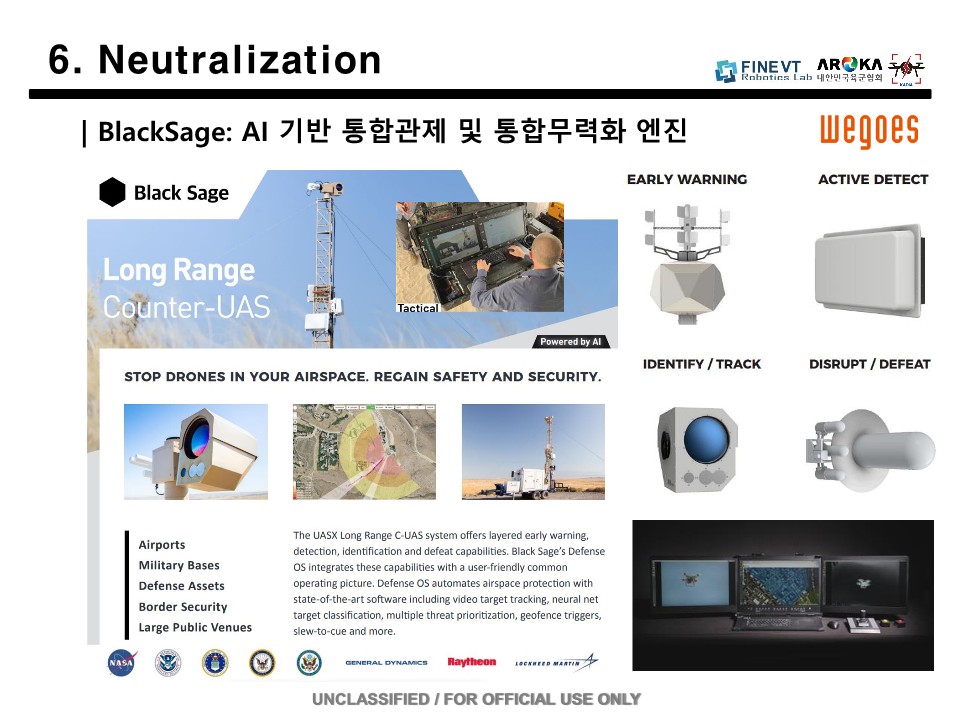
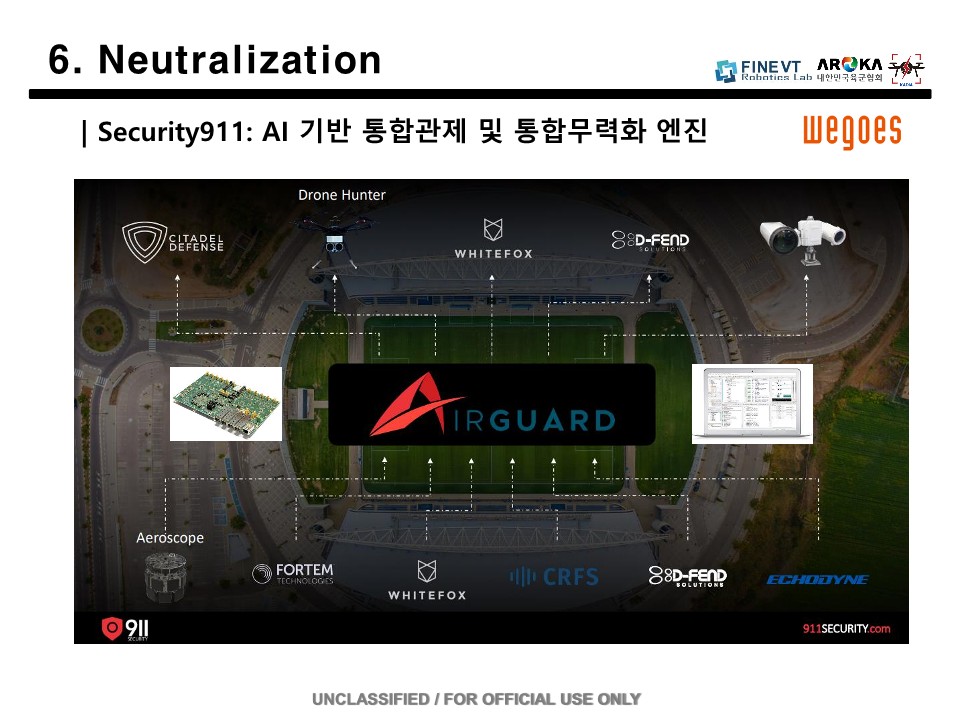
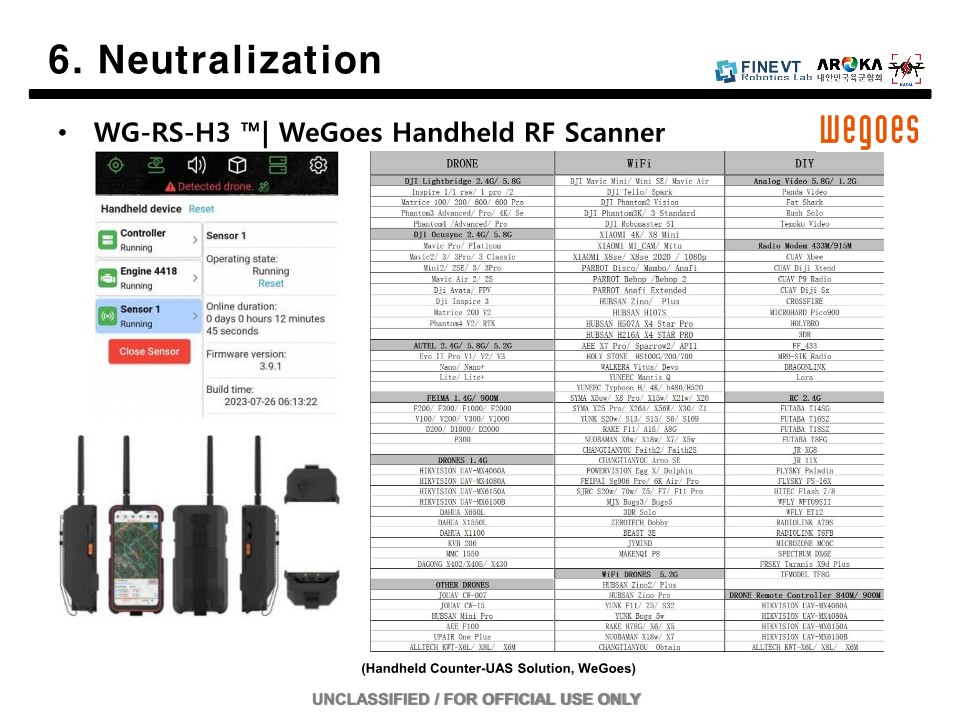
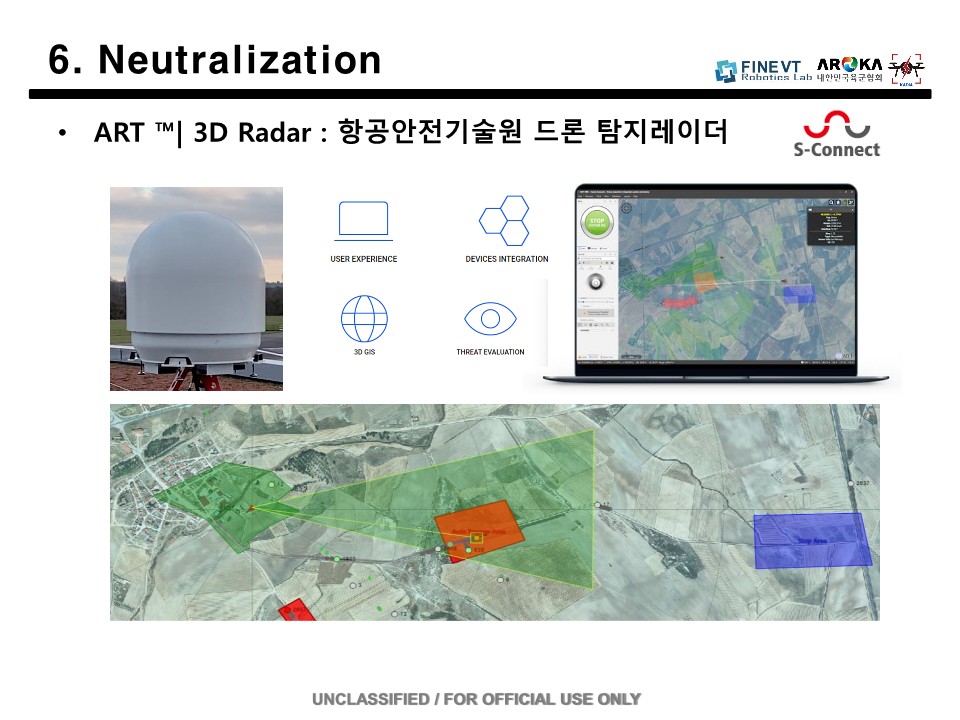
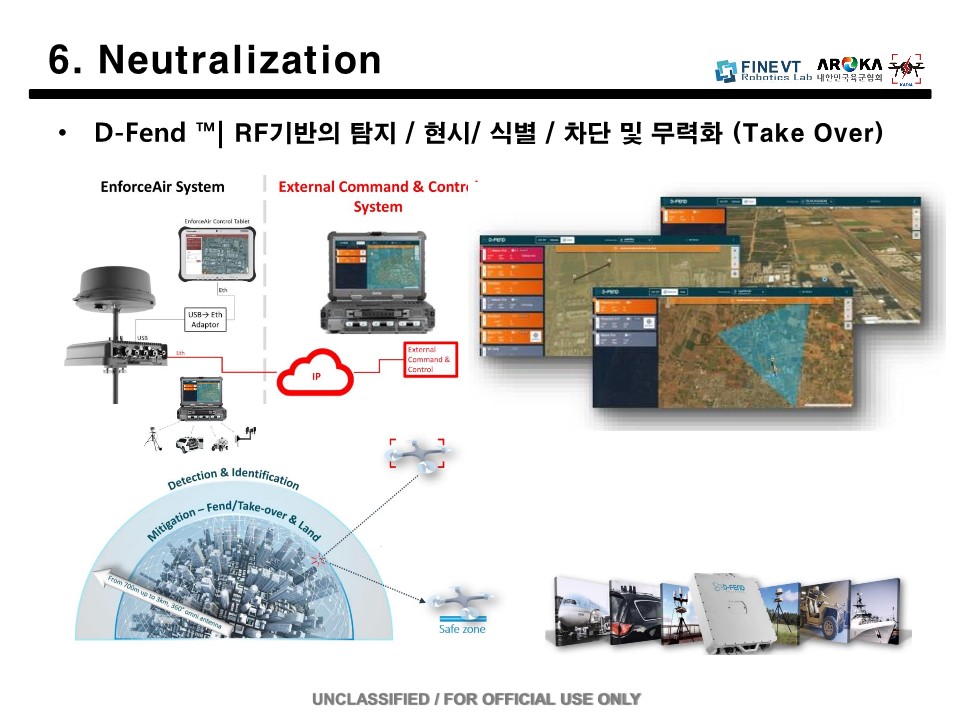
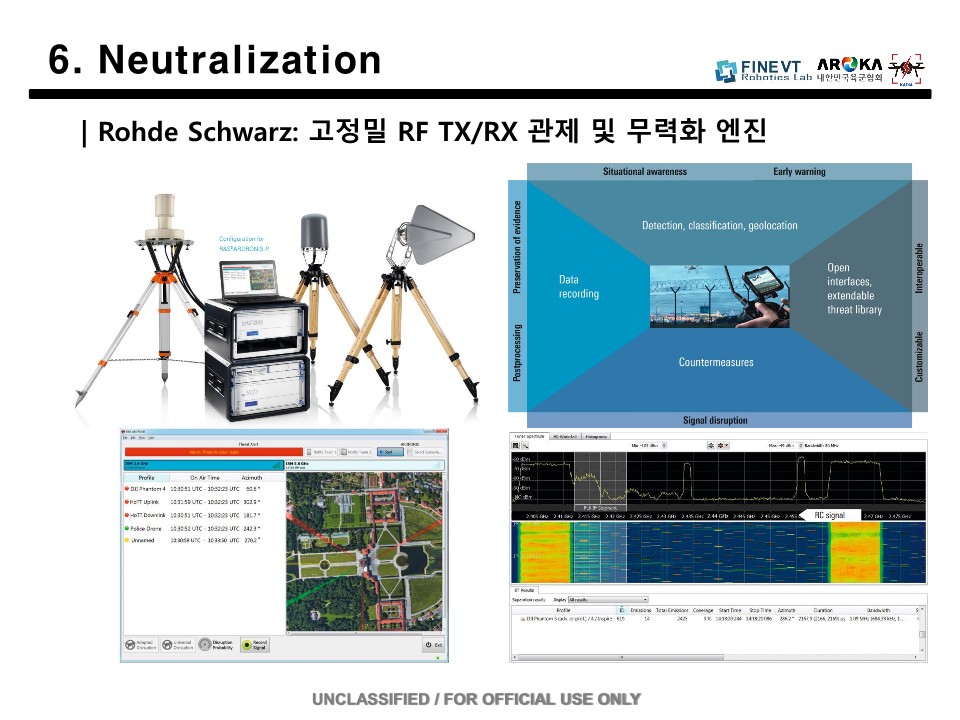
- Multi-sensor detection (3D radar, RF scanning, electro-optical/infrared tracking).
- AI-based drone classification and threat prioritization.
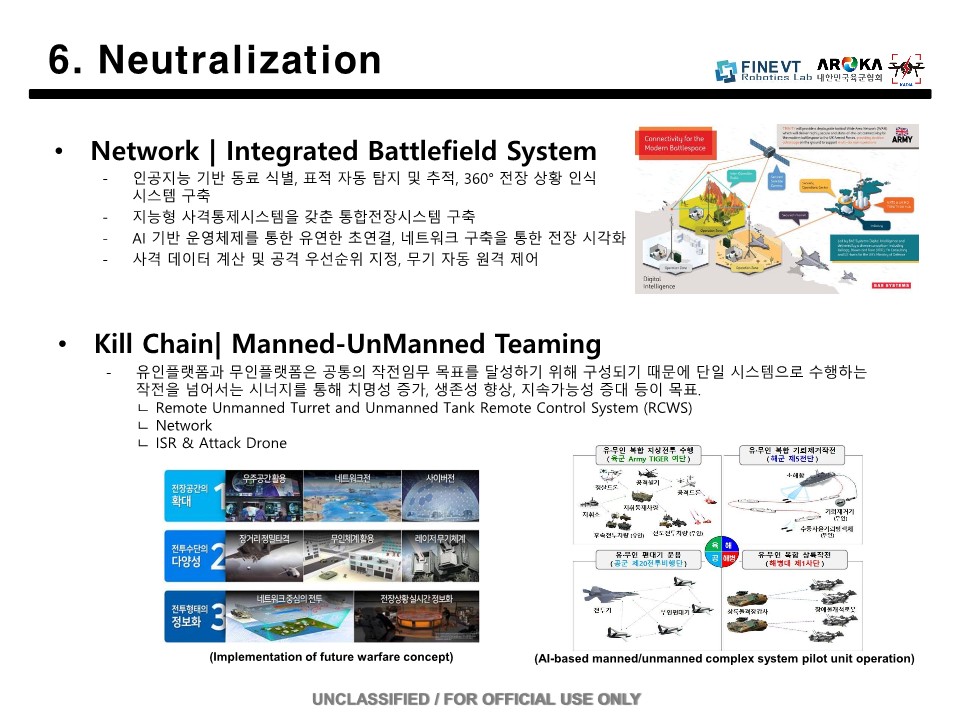
- Real-time integration with airport ATC and security command systems.
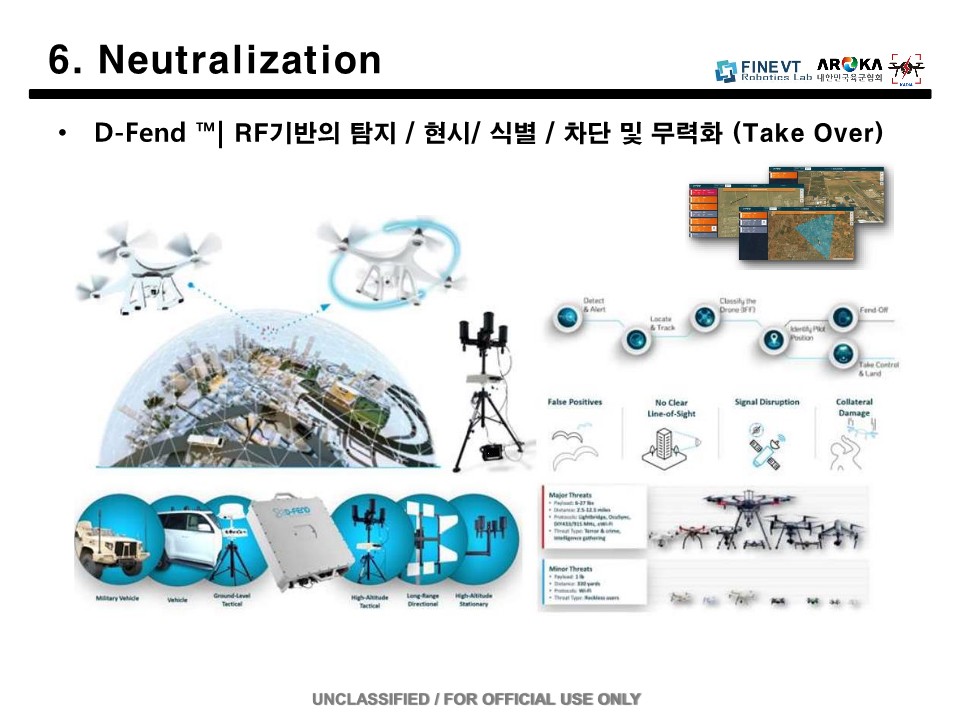
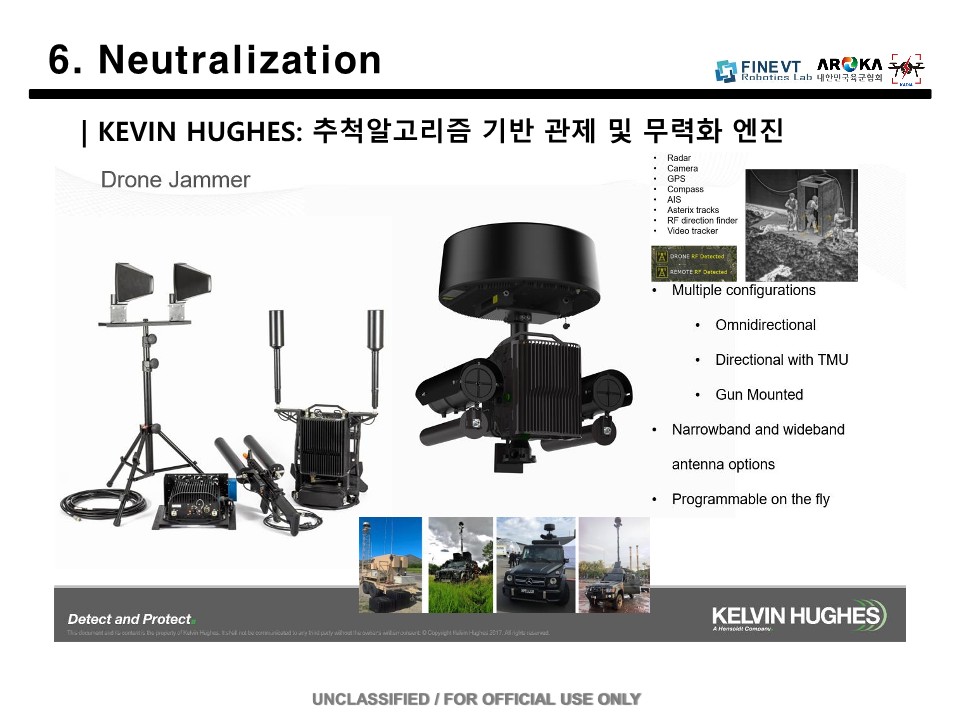
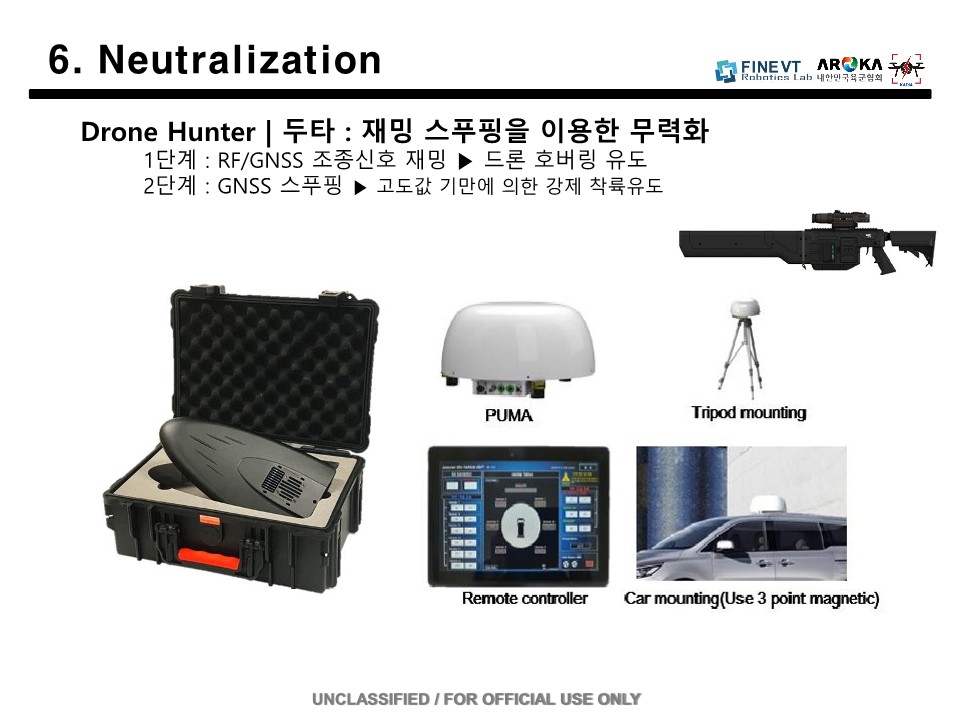
- Neutralization modules including RF jamming, GNSS spoofing, and directed-energy options.
- Performance:
- High detection accuracy in complex environments.
- Effective neutralization range exceeding 5 km.
- Minimal interference with civilian communications and navigation systems.
4. OPERATIONAL IMPROVEMENT DIRECTIONS
- Integration with AAM/UAM Operations:
- Establish secure communication corridors for AAM/UAM to avoid misidentification as hostile drones.
- Develop unified traffic management (UTM) platforms linked to C-UAS systems.
- Layered Security Approach:
- Combine radar, RF, and electro-optical sensors for enhanced situational awareness.
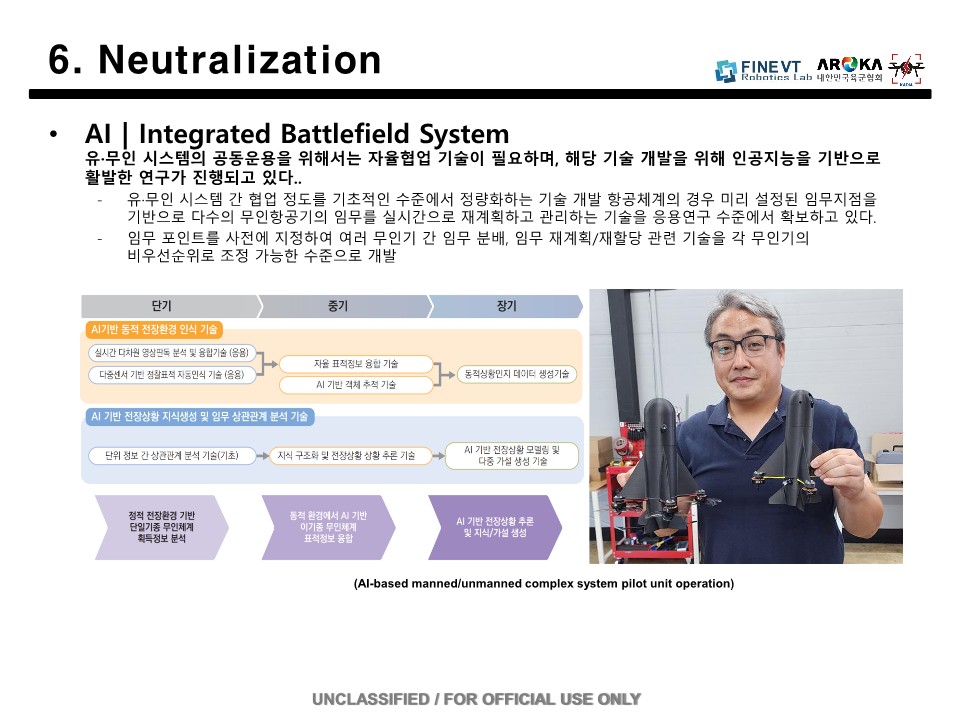
- Employ AI-driven decision-support tools to reduce operator workload.
- Continuous Training:
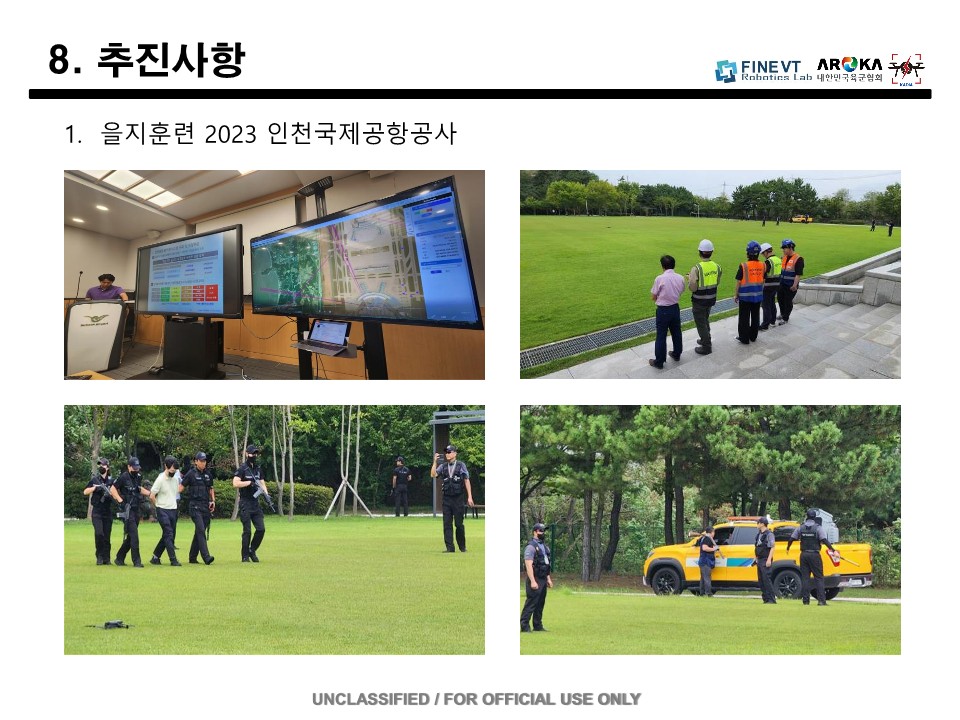
- Conduct joint drills involving airport security, military, and law enforcement.
- Simulate coordinated drone swarm attacks for stress-testing defenses.
- Legal/Policy Framework:
- Establish clear rules of engagement for drone neutralization near civilian areas.
- Coordinate with international aviation authorities (ICAO, IATA).
5. NEUTRALIZATION STRATEGIES
- Non-Kinetic Measures:
- RF jamming of control links.
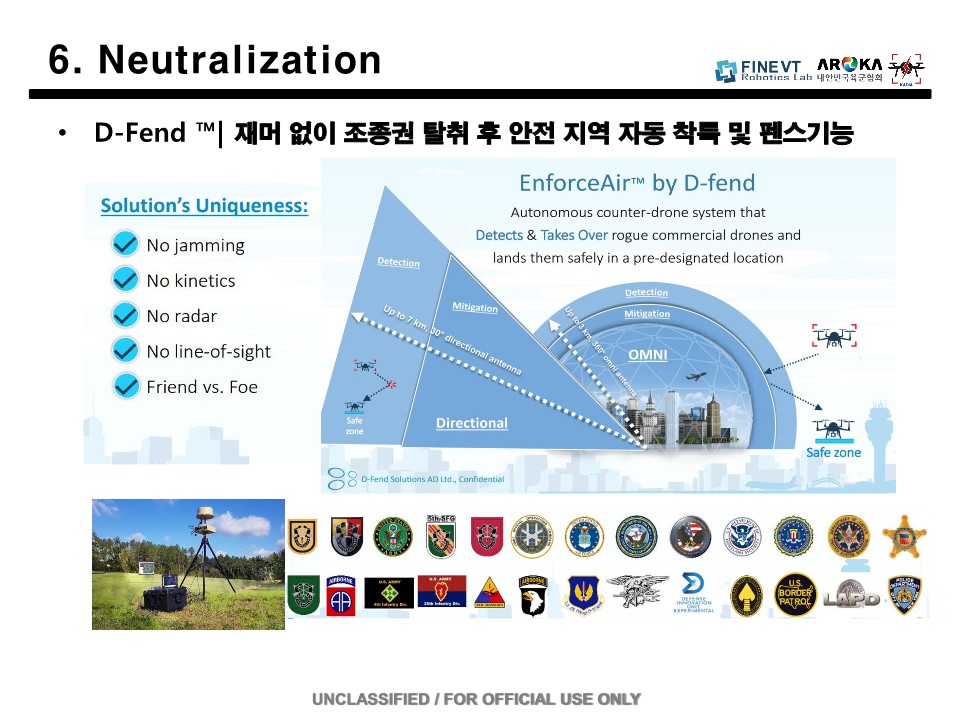
- GNSS spoofing to redirect unauthorized drones.
- Cyber takeover of hostile drones.
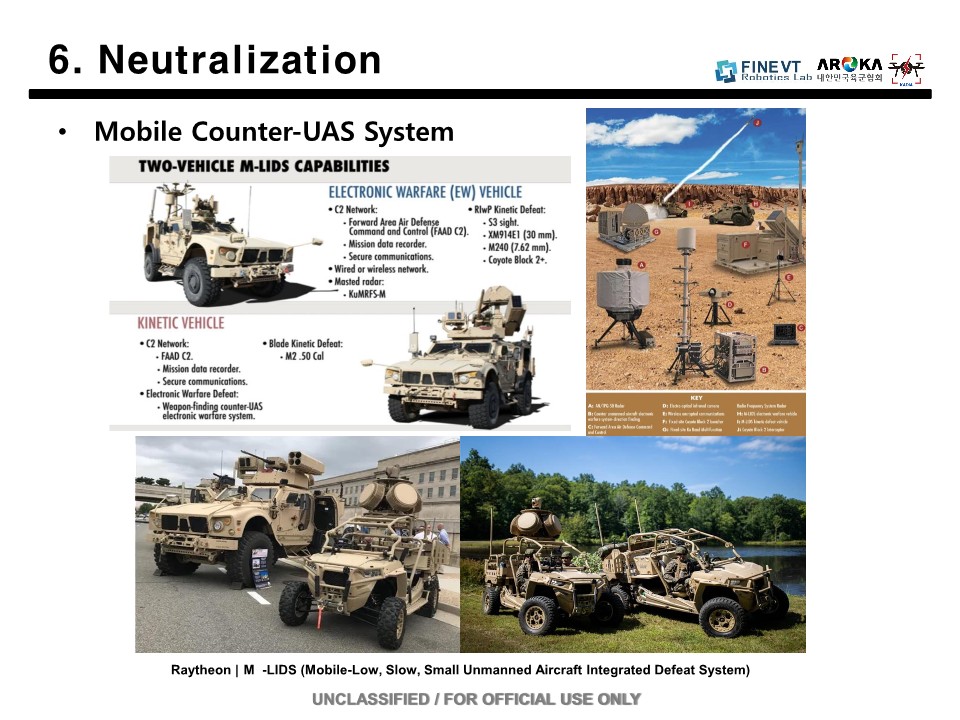
- Kinetic Measures:(reserved for high-threat scenarios)
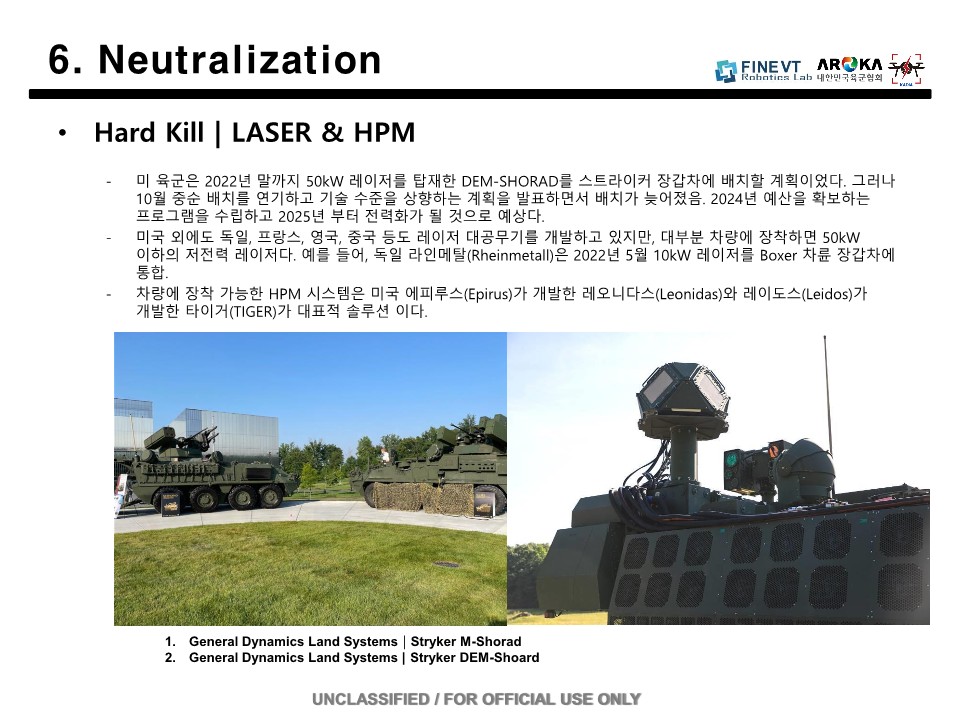
- Directed-energy systems (high-power microwave, laser).
- Interceptor UAVs for physical capture.
- Net-based countermeasures to minimize collateral damage.
- FineVT System Contribution:
- Provides modular neutralization tools adaptable to threat levels.
- Ensures minimal disruption to civil aviation safety systems.

6. RECOMMENDATIONS
- Expand deployment of FineVT Anti-Drone Systems to secondary Korean airports.
- Integrate C-UAS systems with nationwide AAM/UAM traffic management networks.
- Invest in next-generation directed-energy solutions to counter drone swarms.
- Strengthen international cooperation on airport C-UAS standards.
7. CONCLUSION
The deployment of FineVT Robotics LAB’s Anti-Drone System at Incheon International Airport represents a significant advancement in national aviation security. By integrating multi-sensor detection, AI-based classification, and scalable neutralization tools, the system provides a robust foundation for protecting airports against drone threats while ensuring safe integration of future AAM/UAM operations.